
If you manage a building, fire door maintenance sits firmly in your lap. It is one of those responsibilities that is easy to push down the to-do list, until something goes wrong. The good news is that staying on top of it does not have to be complicated.
We manufacture and supply fire doors for all kinds of buildings, from residential apartment blocks to healthcare facilities and commercial offices. We also spend a lot of time helping facilities managers understand what good fire door maintenance actually looks like in practice. This checklist is a practical starting point for anyone who wants to keep their building safe and stay on the right side of current regulations.
The Fire Safety (England) Regulations 2022 made regular fire door inspections a legal requirement for multi-occupied residential buildings. Communal fire doors need checking at least every three months, and flat entrance doors at least once a year.
Beyond the legal side, a poorly maintained fire door simply will not perform when it needs to. A door that fails to close fully, has damaged seals, or shows visible wear to the frame offers far less protection than its fire rating suggests. Regular fire door maintenance is the only way to keep that protection intact throughout the door’s working life.
Work through the following checks on each fire door in your building. Use a logbook or digital record to document what you find each time; this record is important evidence of compliance.
The door closer is what makes a fire door a fire door in everyday use. Open the door to about 90 degrees and let it go. It should swing fully shut and click into the latch without any help from you.
What to look for: Any door that stalls, stays ajar, or slams shut needs attention. A closer that fails to pull the door fully closed leaves the building unprotected.
Action: If adjustment or replacement is needed, contact Pendle Doors to ensure you get the correct closer to match the size and weight of your door. Always use a trained professional to carry out this work, as incorrect fitting affects the door’s certification.
The intumescent seals around the door and frame play a crucial role in fire door performance, expanding under heat to block the gap between the door and frame and helping to maintain the integrity of the fire compartment.
What to look for: Run your eye around the full perimeter of the door. Seals should be continuous, firmly seated, and free from cracks or compression damage.
Action: Replace any seal that is missing, split, loose, or painted over. Use only approved replacement seals and keep a record of the product used.
Physical damage to the door or frame reduces its ability to hold back fire, even if every other component is in good condition. Damage to the core material is particularly serious, as this affects the structural integrity of the door set.
What to look for: Look for cracks, splits, swelling, or deep surface damage on the door face. Check the frame for gaps, warping, or loose fixings at the corners and along the length.
Action: Minor surface scuffs are usually cosmetic, but anything that affects the door leaf or frame structure needs to be assessed by a specialist. In many cases, replacement is the safer option.
Hinges bear the weight of the door and keep it correctly aligned within the frame. A loose or damaged hinge can cause the door to drop, which creates gaps that compromise the fire seal.
What to look for: Check every hinge for loose screws, signs of corrosion, or any movement in the hinge itself. The door should hang squarely and swing smoothly without resistance.
Action: Tighten any loose fixings immediately. If hinges need replacing, contact Pendle Doors to ensure you receive the correct hinge along with the appropriate screws and intumescent protection to match the original door set specification.
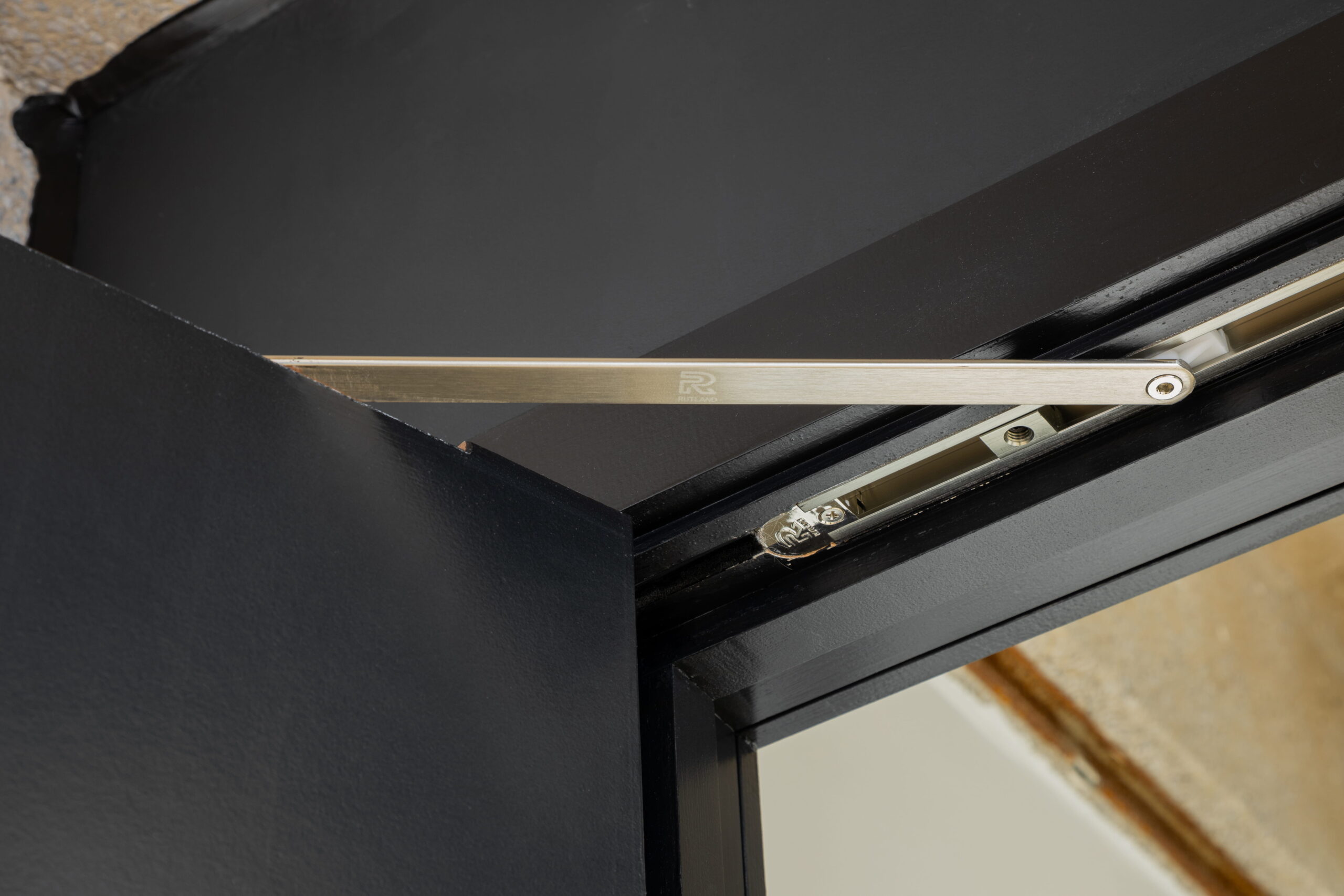
Handles, locks, letter plates, and other hardware are all part of the certified door set. Using the wrong ironmongery or letting components wear out can affect how the door closes and whether it meets its tested specification.
What to look for: Test the handle and latch mechanism on every door. Check that locks engage correctly and that any door hold-open devices release properly when triggered.
Action: Replacing ironmongery is not straightforward, the correct intumescent fire protection must also be included to maintain the door set’s certification. Contact Pendle Doors for guidance to ensure any replacements are fully compliant.
Every certified Pendle fire door carries a Q-Mark plug, located on the door leaf below the top hinge. This plug confirms the manufacturer, fire rating, and other key details. Without it, you cannot verify that the door meets the required standard.
What to look for: Check that the Q-Mark plug is present and legible on every fire door. Also confirm that appropriate signage, such as ‘Fire Door Keep Shut’, is clearly displayed on both faces of each door.
Action: Report any missing or illegible plugs to Pendle Doors. Do not assume the door is compliant without being able to verify it. Missing signage should be replaced immediately.
A written record of every inspection is not just good practice; it is essential for demonstrating compliance under current fire safety legislation. Your log should show the date of each check, who carried it out, what was found, and what action was taken.
Digital maintenance records make this easier to manage across multiple buildings or large sites. Many facilities managers now use dedicated software, though even a well-organised spreadsheet works perfectly well if it is kept consistently.
Some fire door issues fall outside the scope of a routine inspection check. If you find extensive damage to a door set, evidence of incorrect previous repairs, or missing certification, it is worth speaking to one of the experienced fire door companies who can assess the situation properly.
We regularly support facilities managers who need expert advice on whether a door is worth repairing or whether replacement is the right call. We manufacture fully certified fire door sets under the BM Trada Q-Mark scheme, covering ratings from FD30 through to FD120, and we can advise on specification and compliance from the first conversation.
The buildings that manage fire door maintenance well are the ones that treat it as a scheduled task rather than a reactive one. Building it into your quarterly and annual inspection programme means nothing gets missed and your records stay up to date.
If you need support with specifying replacement fire doors, or want to talk through your current door sets with a specialist, get in touch with the Pendle Doors team today. We are here to help you keep your building safe and compliant all year round.
Back To All Posts